Samsung Galaxy A16 Review

The MobGadgets Verdict
The Samsung Galaxy A16 emerges as a compelling and well-rounded smartphone that successfully navigates the competitive mid-range market. Its standout feature is undoubtedly the expansive 6.7-inch Super AMOLED display with a fluid 90Hz refresh rate, o...
Overview
The Samsung Galaxy A16 emerges as a significant contender in the mid-range smartphone market, aiming to deliver a balanced package of features and performance at an accessible price point. Building upon Samsung's established reputation, the A16 seeks to cater to a broad audience, from students and young professionals to those who prioritize reliable everyday functionality without breaking the bank. Announced on October 15, 2024, and released on November 20, 2024, this device positions itself as an evolution of its predecessors, incorporating updated hardware and software to meet contemporary user demands. With its focus on a vibrant display, a capable camera system, and solid battery life, the Galaxy A16 presents itself as a compelling option for users seeking a dependable daily driver. The inclusion of 5G capabilities (though not explicitly detailed in the provided specs, HSPA and LTE are listed, implying a strong focus on cellular connectivity) and a modern operating system further enhance its appeal. The device aims to strike a harmonious chord between essential features and cost-effectiveness, a strategy that has historically resonated well with consumers in this segment.
Design & Build Quality
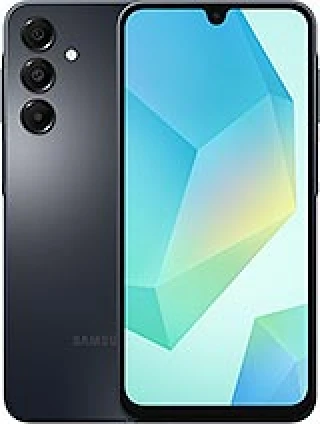
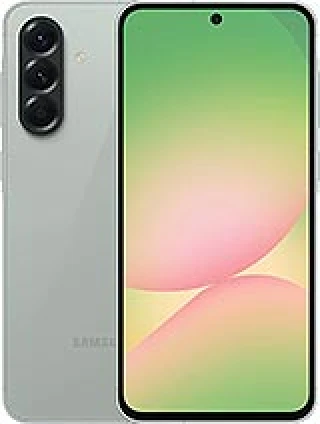
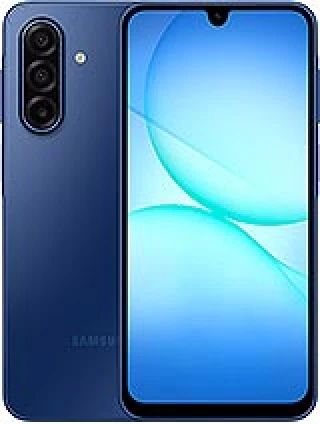
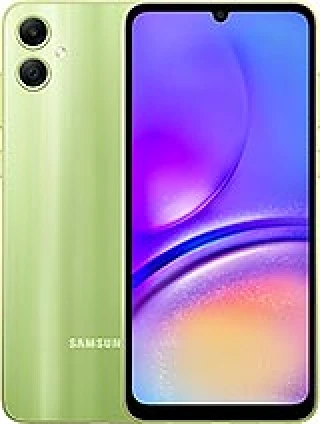
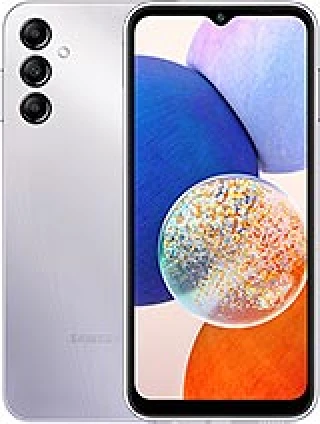
The Samsung Galaxy A16 boasts a contemporary and practical design, prioritizing both aesthetics and ergonomics. Measuring 164.4 x 77.9 x 7.9 mm, it strikes a comfortable balance in hand, with a slim profile that contributes to its manageable weight of 200g. The build materials consist of a glass front, which offers a premium feel, paired with a plastic back and frame. This combination is a common and sensible choice in the mid-range segment, offering durability and cost-effectiveness. The device supports dual Nano-SIM configurations, catering to users who require two phone numbers or a combination of personal and work lines. A noteworthy feature is its IP54 dust and water resistance rating, signifying protection against dust ingress and water splashes, adding a layer of resilience to everyday usage. The placement of the fingerprint sensor on the side-mounted position is a practical choice, allowing for quick and intuitive unlocking. The available color options – Gray, water green, and midnight blue – offer a degree of personalization, appealing to different aesthetic preferences. Overall, the design of the Galaxy A16 is a thoughtful blend of modern trends and functional considerations, aiming for a user-friendly and robust experience.
Display
The Samsung Galaxy A16 features a captivating 6.7-inch Super AMOLED display, a standout feature for its price segment. The Super AMOLED technology is renowned for its vibrant colors, deep blacks, and excellent contrast ratios, promising an immersive viewing experience. The inclusion of a 90Hz refresh rate elevates the visual fluidity, resulting in smoother scrolling, more responsive gaming, and an overall more pleasant interaction with the device. With a screen-to-body ratio of approximately 86.0%, the display maximizes the usable screen real estate, offering a nearly edge-to-edge experience. The resolution of 1080 x 2340 pixels, with a 19.5:9 aspect ratio and a pixel density of roughly 385 ppi, ensures sharp and detailed visuals, making text crisp and images vibrant. The display's reported maximum brightness of 808 nits (measured) is commendable, ensuring good visibility even in bright outdoor conditions. This combination of a large, high-resolution, high-refresh-rate Super AMOLED panel with excellent brightness levels makes the Galaxy A16 a strong choice for media consumption, gaming, and general smartphone use.
Performance
Under the hood, the Samsung Galaxy A16 is powered by the MediaTek Helio G99 chipset, fabricated on a 6nm process. This octa-core processor features a configuration of 2x2.2 GHz Cortex-A76 cores and 6x2.0 GHz Cortex-A55 cores, promising efficient multitasking and smooth performance for daily tasks. Complementing the chipset is the Mali-G57 MC2 GPU, which handles graphical processing for games and multimedia. The device comes in a variety of RAM and internal storage configurations, including 128GB with 4GB, 6GB, or 8GB of RAM, and 256GB with 4GB, 6GB, or 8GB of RAM. This extensive range of options allows users to select a variant that best suits their storage and multitasking needs. The inclusion of a microSDXC card slot, which cleverly utilizes a shared SIM slot, provides an avenue for expandable storage, further enhancing the device's flexibility. The performance benchmarks, such as an AnTuTu score of 387422 (v10) and a GeekBench score of 1920 (v6), suggest that the Galaxy A16 is well-equipped to handle demanding applications and moderate gaming sessions with relative ease. The 3DMark score of 345 (Wild Life Extreme) indicates its capabilities in graphically intensive scenarios. This robust performance profile, coupled with ample RAM and storage options, positions the Galaxy A16 as a capable performer for its segment.
Software & UI
The Samsung Galaxy A16 runs on Android 14, the latest iteration of Google's mobile operating system, enhanced with Samsung's proprietary One UI 6.1. This combination ensures a user-friendly and feature-rich experience. The commitment to providing up to 6 major Android upgrades is a significant selling point, guaranteeing long-term software support and access to future Android features and security patches. One UI 6.1 brings a refined interface, improved customization options, and a suite of Samsung's signature applications and services, aiming to provide a cohesive and intuitive user experience. The integration of Google's core services alongside Samsung's ecosystem creates a powerful platform for productivity and entertainment. Features like enhanced multitasking capabilities, improved privacy controls, and a streamlined notification system are expected to be present. The timely updates and the extended software support policy demonstrate Samsung's dedication to user satisfaction and device longevity, making the Galaxy A16 a future-proof investment in terms of software.
Camera Quality
The Samsung Galaxy A16 is equipped with a versatile triple rear camera system designed to capture a variety of shots. The main sensor is a 50MP wide lens with an f/1.8 aperture, featuring autofocus (AF) and a 1/2.76" sensor size with 0.64µm pixels. This high-resolution main camera is capable of producing detailed and vibrant images in good lighting conditions. Accompanying it is a 5MP ultrawide lens with an f/2.2 aperture, offering a wider field of view for landscape shots and group photos, with a 1/5.0" sensor and 1.12µm pixels. A 2MP macro lens with an f/2.4 aperture completes the rear setup, allowing for close-up shots of small subjects. The rear camera system supports features like LED flash, panorama, and HDR for enhanced image quality, and can record video at 1080p@30fps. On the front, a 13MP selfie camera with an f/2.0 aperture, a 1/3.1" sensor, and 1.12µm pixels is present for high-quality self-portraits and video calls, also capable of 1080p@30fps video recording. While the video recording capabilities are limited to 1080p at 30fps, the overall camera hardware offers a good balance for everyday photography needs in its class.
Battery Life
The Samsung Galaxy A16 is powered by a substantial 5000 mAh battery, a capacity that promises excellent endurance for all-day usage. This large battery, when paired with the power-efficient MediaTek Helio G99 chipset and the Super AMOLED display, is expected to provide a long-lasting experience for most users. The device supports 25W wired charging, which, while not the fastest in the market, is a respectable speed that allows for reasonably quick top-ups. The 'Active use score' of 14:43h indicates a strong performance in real-world scenarios, suggesting that users can confidently go through a full day of moderate to heavy use without needing to reach for a charger. The combination of a high-capacity battery and efficient hardware ensures that the Galaxy A16 can keep up with demanding daily routines, making it a reliable companion for extended periods away from a power outlet. This focus on battery longevity is a crucial aspect for users who rely heavily on their smartphones throughout the day.
Connectivity & Networking
The Samsung Galaxy A16 offers a comprehensive suite of connectivity options to keep users connected. It supports GSM, HSPA, and LTE network technologies, ensuring broad compatibility with cellular networks. For wireless networking, it features Wi-Fi 802.11 a/b/g/n/ac, supporting dual-band connectivity and Wi-Fi Direct for seamless network access and device-to-device communication. Bluetooth 5.3 with A2DP and LE provides efficient and stable wireless connections for accessories like headphones and speakers. Location services are well-covered with support for GPS, GALILEO, GLONASS, BDS, and QZSS, ensuring accurate navigation and location tracking. The inclusion of NFC is a significant advantage, enabling contactless payments and quick pairing with compatible devices, though its availability is market and region dependent. FM radio is also present, offering an alternative entertainment option, again with regional dependency. The device utilizes a USB Type-C 2.0 port for charging and data transfer, a modern standard that ensures compatibility with a wide range of accessories. The dual Nano-SIM support further enhances its connectivity flexibility for users needing multiple lines.
Additional Features
Comparison with Alternatives
In the competitive mid-range smartphone landscape, the Samsung Galaxy A16 stands out due to its Super AMOLED display with a 90Hz refresh rate, which is a significant advantage over many rivals that still offer standard LCD panels or lower refresh rates. The MediaTek Helio G99 chipset provides a solid performance baseline, competing favorably with other mid-range MediaTek and Snapdragon processors. The camera system, with its 50MP main sensor, is on par with many devices in its segment, offering good versatility for everyday photography. Compared to its predecessors, the A16 likely brings improvements in chipset efficiency, display technology, and potentially camera software. Devices like the Xiaomi Redmi Note series or the Realme numbered series are direct competitors, often offering similar specifications at comparable price points. However, Samsung's software experience, particularly with the promise of extensive OS updates and the refined One UI interface, can be a deciding factor for many consumers. The IP54 rating for dust and water resistance also offers a competitive edge in terms of durability. While some competitors might offer faster charging or slightly more powerful chipsets in specific variants, the A16's balanced offering, focusing on display quality, software longevity, and a reliable overall experience, carves out its niche effectively. Its price point of around €144.00 / $143.87 / £109.39 places it firmly in the budget-conscious mid-range segment, where it aims to deliver exceptional value.
Pros and Cons
| Pros | Cons |
|---|---|
| Vibrant 6.7-inch Super AMOLED display with 90Hz refresh rate for smooth visuals. | Plastic build, while durable, might feel less premium than glass or metal designs. |
| Capable MediaTek Helio G99 chipset for good everyday performance. | Video recording limited to 1080p@30fps. |
| Versatile 50MP triple rear camera system for various photography needs. | No 3.5mm headphone jack, requiring USB-C or wireless audio solutions. |
| Long-lasting 5000 mAh battery for extended usage. | MicroSDXC card slot shares functionality with a SIM slot, limiting dual SIM and expandable storage simultaneously. |
| 25W wired charging for reasonably quick power-ups. | NFC and FM radio availability is dependent on region. |
| Clean and feature-rich One UI 6.1 software experience with up to 6 major Android upgrades. | |
| IP54 dust and water resistance for added durability. | |
| Ample RAM and storage configurations available, with microSDXC support. | |
| Side-mounted fingerprint sensor for convenient unlocking. | |
| NFC support for contactless payments and connectivity (market dependent). |
Final Conclusion
The Samsung Galaxy A16 emerges as a compelling and well-rounded smartphone that successfully navigates the competitive mid-range market. Its standout feature is undoubtedly the expansive 6.7-inch Super AMOLED display with a fluid 90Hz refresh rate, offering an exceptional visual experience for its price point. The integration of the efficient MediaTek Helio G99 chipset, coupled with generous RAM and storage options, ensures a smooth and responsive performance for everyday tasks, gaming, and multitasking. The versatile 50MP triple camera system is capable of capturing quality photos, and the substantial 5000 mAh battery promises reliable all-day endurance, further enhanced by 25W wired charging. Samsung's commitment to software longevity with up to six major Android upgrades and the refined One UI 6.1 interface provides significant long-term value. The inclusion of IP54 dust and water resistance adds a practical layer of durability. While the lack of a 3.5mm headphone jack and the shared SIM/microSD slot are minor drawbacks, they are common trade-offs in modern smartphone design. Overall, the Samsung Galaxy A16 presents a strong case for consumers seeking a feature-rich, reliable, and visually appealing smartphone without a premium price tag, making it a highly recommendable option in its segment.