Samsung Galaxy A55 Review

The MobGadgets Verdict
The Samsung Galaxy A55 stands out as a compelling mid-range smartphone that successfully blends premium design, robust features, and long-term value. Its build quality, featuring Gorilla Glass Victus+ and an aluminum frame, coupled with IP67 water re...
Overview
The Samsung Galaxy A55 emerges as a significant contender in the mid-range smartphone market, building upon the successes of its predecessors while introducing key upgrades that elevate its user experience. Launched in March 2024, this device aims to offer a premium feel and robust feature set without the flagship price tag. It positions itself as a balanced option for users seeking a reliable daily driver with a focus on display quality, camera capabilities, and enduring battery life. The Galaxy A55 is designed to appeal to a broad audience, from students and young professionals to those simply looking for a dependable and feature-rich smartphone. With its emphasis on durability, thanks to its glass and aluminum build, and an attractive Super AMOLED display, it strives to provide a compelling package that punches above its weight class. The inclusion of 5G connectivity ensures future-proofing, allowing for faster data speeds and a more seamless online experience. Samsung's commitment to software updates further adds to its long-term value proposition, promising an extended lifespan for the device. This review will delve into the specifics of the Galaxy A55's hardware and software, evaluating its performance, user interface, camera prowess, and overall value.
Design & Build Quality

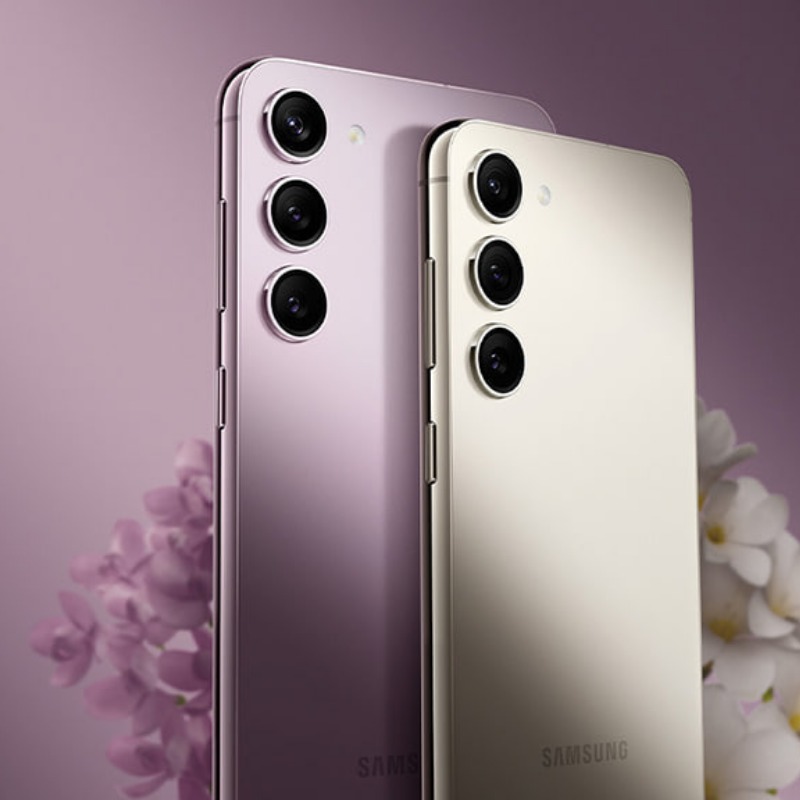
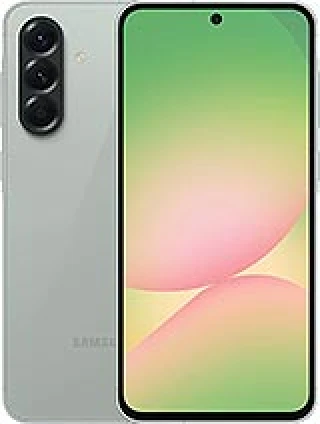
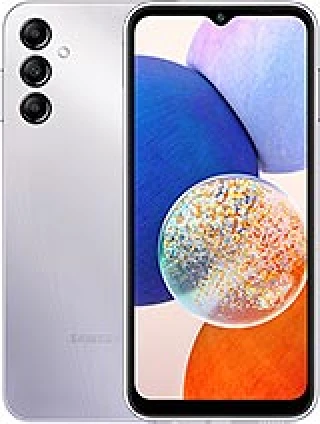
Samsung has refined the design language for the Galaxy A55, adopting a more premium aesthetic that mirrors its higher-end siblings. The device boasts a **glass front (Gorilla Glass Victus+) and back, encased in a sturdy aluminum frame**, a significant upgrade from previous A-series models that often featured plastic builds. This material choice not only enhances the phone's durability but also lends it a more sophisticated and flagship-like feel in the hand. The dimensions, at 161.1 x 77.4 x 8.2 mm, make it a substantial device, yet the 213g weight feels well-distributed, contributing to a comfortable in-hand feel for its size. The **IP67 dust and water resistance** rating is another welcome addition, offering peace of mind against accidental spills and submersion up to 1 meter for 30 minutes, a feature rarely found in this price segment. The available colors – Iceblue, Lilac, Navy, and Lemon – offer a good range of personalization options. The SIM tray configuration is also versatile, supporting Nano-SIM, Nano-SIM + eSIM, or even dual Nano-SIM setups, with the flexibility of a shared SIM slot for microSDXC expansion. Overall, the Galaxy A55's design strikes a fine balance between premium materials, robust construction, and practical usability, making it a standout in its category.
Display
The display on the Samsung Galaxy A55 is undoubtedly one of its strongest selling points. It features a **6.6-inch Super AMOLED panel with a 120Hz refresh rate and HDR10+ support**. This combination delivers vibrant colors, deep blacks, and smooth scrolling and animations, making for an incredibly immersive viewing experience. The 1000 nits (HBM) peak brightness ensures that the display remains easily readable even in bright outdoor conditions. The resolution of **1080 x 2340 pixels**, with a 19.5:9 aspect ratio and approximately 390 ppi density, provides sharp and clear visuals for everything from browsing text to watching videos. The **Corning Gorilla Glass Victus+ protection** on the front is a premium feature that offers excellent scratch and drop resistance, adding to the device's durability. The **~85.8% screen-to-body ratio** means that the display occupies a significant portion of the front fascia, minimizing bezels and maximizing screen real estate. The **Always-on display** functionality allows users to quickly check the time, date, and notifications without needing to fully wake the phone. The measured max brightness of 1010 nits further confirms its excellent outdoor visibility. Whether you're consuming media, playing games, or simply navigating the interface, the A55's display provides a visually stunning and highly responsive canvas.
Performance
At the heart of the Samsung Galaxy A55 lies the **Exynos 1480 chipset, built on a 4nm process**. This octa-core processor, featuring a configuration of 4x2.75 GHz Cortex-A78 and 4x2.0 GHz Cortex-A55 cores, is paired with the **Xclipse 530 GPU**, promising a significant boost in both raw processing power and graphical capabilities compared to its predecessors. This chipset is designed to handle everyday tasks with ease, from browsing and social media to multitasking and light gaming. The inclusion of multiple RAM configurations, ranging from **6GB to 12GB**, ensures smooth operation and efficient app management, allowing users to switch between applications without significant lag. Storage options are also generous, with **128GB and 256GB** variants available, further expandable via the shared SIM slot with a microSDXC card. Synthetic benchmarks provide a quantitative measure of its performance, with AnTuTu scores reaching upwards of 635,598 (v9) and 726,158 (v10), and GeekBench scores around 3259 (v5) and 3350 (v6). These figures indicate that the A55 is capable of handling demanding applications and modern mobile games, though it may not compete directly with high-end flagships in the most intensive gaming scenarios. The Xclipse 530 GPU is particularly noteworthy for its RDNA 2 architecture, suggesting improved graphical fidelity and efficiency in supported games. For typical daily usage, the Galaxy A55 delivers a fluid and responsive experience, making it a capable performer for its class.
Software & UI
The Samsung Galaxy A55 runs on **Android 14 out of the box, overlaid with Samsung's One UI 6.1**. This combination offers a feature-rich and customizable user experience. One UI is known for its intuitive interface, extensive customization options, and thoughtful additions that enhance productivity and daily use. Samsung's commitment to long-term software support is a significant advantage, with the promise of **up to 4 major Android upgrades** and 5 years of security updates. This ensures that the device will remain up-to-date with the latest features and security patches for an extended period, maximizing its lifespan and value. One UI 6.1 brings a refreshed visual design, improved multitasking capabilities, and enhanced privacy features. The inclusion of features like **Circle to Search** adds a layer of modern convenience, allowing for quick information retrieval directly from the screen. The presence of **virtual proximity sensing** is another subtle yet important feature that contributes to a seamless user experience. The software on the A55 is designed to be both powerful and user-friendly, catering to both tech-savvy individuals and those who prefer a straightforward interface. The integration of Samsung's ecosystem, including compatibility with other Samsung devices and services, further enhances its appeal for existing Samsung users.
Camera Quality
The Samsung Galaxy A55 is equipped with a versatile triple rear camera system, headlined by a **50 MP wide sensor with f/1.8 aperture, PDAF, and OIS**. This main sensor, with its 1/1.56" size and 1.0µm pixels, is capable of capturing detailed and well-exposed photos in various lighting conditions. Complementing the main sensor are a **12 MP ultrawide lens with a 123˚ field of view** and a **5 MP macro lens**. The ultrawide lens is perfect for capturing expansive landscapes and group shots, while the macro lens allows for close-up photography of small details. Features like LED flash, panorama, and HDR enhance the camera's versatility. For video recording, the rear cameras can shoot up to **4K@30fps and 1080p@30/60fps**, with gyro-EIS providing effective stabilization. On the front, a **32 MP selfie camera with an f/2.2 aperture and 26mm focal length** ensures high-quality self-portraits and clear video calls. The front camera also supports **4K@30fps and 1080p@30/60fps video recording**. While the camera hardware is impressive for its class, the final image quality will also depend on Samsung's image processing software. However, based on typical Samsung performance, users can expect vibrant colors, good dynamic range, and generally pleasing results from both the main and ultrawide lenses. The macro lens, while functional, is often more of a supplementary tool in mid-range devices.
Battery Life
The Samsung Galaxy A55 is powered by a substantial **5000 mAh Li-Ion battery**. This large capacity, combined with the power-efficient Exynos 1480 chipset and Super AMOLED display, suggests excellent battery life. For everyday users, this should translate to a full day of moderate to heavy usage on a single charge. The device supports **25W wired charging**, which, while not the fastest in the market, is a respectable speed for this price segment and should allow for reasonably quick top-ups. The detailed battery tests indicate an impressive **Active use score of 13:27h**, which is a strong indicator of its endurance. This means users can expect prolonged usage for activities like browsing, video playback, and social media before needing to reach for a charger. While fast charging is always desirable, the 25W capability should be sufficient for most users, especially when considering the overall longevity of the battery throughout the day. The combination of a high-capacity battery and efficient power management makes the Galaxy A55 a reliable companion for extended periods away from a power outlet.
Connectivity & Networking
The Samsung Galaxy A55 is well-equipped with modern connectivity features, ensuring a seamless and up-to-date user experience. It supports the latest network technologies, including **GSM, HSPA, LTE, and 5G**, future-proofing the device for faster data speeds and wider network coverage. The Wi-Fi capabilities are robust, with support for **Wi-Fi 802.11 a/b/g/n/ac/6**, dual-band, and Wi-Fi Direct, ensuring fast and stable wireless internet connections. **Bluetooth 5.3** with A2DP and LE support provides efficient and reliable wireless audio streaming and device pairing. For navigation, the A55 integrates **GPS, GALILEO, GLONASS, BDS, and QZSS**, offering precise and accurate location services. **NFC** is included, though its availability may vary by region, enabling contactless payments and quick device pairing. The **USB Type-C 2.0 port with OTG support** serves as the primary connection for charging and data transfer, and the OTG functionality allows for connecting external storage devices or other USB accessories. Notably, the device **does not feature a 3.5mm headphone jack**, which is becoming increasingly common in modern smartphones, requiring users to rely on USB-C or wireless headphones. The stereo speakers, however, provide a good audio output experience for media consumption without headphones.
Additional Features
Comparison with Alternatives
The Samsung Galaxy A55 enters a competitive mid-range segment, where it directly contends with devices like the Google Pixel 7a, Xiaomi Redmi Note 13 Pro+, and the OnePlus Nord 3. Compared to the Google Pixel 7a, the A55 boasts a larger display and potentially a more premium build with its glass and aluminum construction, though the Pixel 7a often excels in computational photography. The Xiaomi Redmi Note 13 Pro+ offers a very similar premium design and display but might vary in software experience and long-term update commitment. The OnePlus Nord 3 provides a strong performance proposition and fast charging, but the A55's camera hardware and potentially more refined software could give it an edge for some users. The A55's IP67 rating is a significant advantage over many competitors in its price bracket, offering superior durability. Its Super AMOLED display with 120Hz refresh rate and HDR10+ is competitive, but some rivals might offer higher refresh rates or brighter panels. The Exynos 1480 chipset is a capable performer, but direct comparisons with Qualcomm's Snapdragon offerings in competing devices would be crucial for absolute performance metrics. Samsung's established ecosystem and strong software update commitment are also key differentiators that appeal to a loyal customer base.
Pros and Cons
| Pros | Cons |
|---|---|
| Premium design with glass and aluminum construction. | No 3.5mm headphone jack. |
| IP67 dust and water resistance. | 25W wired charging is not the fastest available. |
| Vibrant 6.6-inch Super AMOLED display with 120Hz refresh rate and HDR10+. | Exynos chipset performance may not match some top-tier Snapdragon offerings in raw power. |
| Capable triple rear camera system with OIS on the main sensor. | Macro camera quality might be average. |
| Long-lasting 5000 mAh battery. | NFC availability is market/region dependent. |
| Future-proofed with 5G connectivity. | |
| Excellent software support with 4 major Android upgrades and 5 years of security updates. | |
| Versatile SIM slot options, including eSIM support. | |
| Stereo speakers for an improved audio experience. |
Final Conclusion
The Samsung Galaxy A55 stands out as a compelling mid-range smartphone that successfully blends premium design, robust features, and long-term value. Its build quality, featuring Gorilla Glass Victus+ and an aluminum frame, coupled with IP67 water resistance, sets a high standard for its segment. The stunning Super AMOLED display provides an immersive visual experience, while the versatile camera system, led by a capable 50MP OIS sensor, promises good photo quality. Under the hood, the Exynos 1480 chipset, paired with ample RAM and storage options, delivers smooth performance for everyday tasks and moderate gaming. The 5000 mAh battery ensures all-day endurance, and the commitment to 4 major Android OS updates and 5 years of security patches makes it a wise investment for the long haul. While the absence of a 3.5mm headphone jack and the 25W charging speed might be minor drawbacks for some, they are balanced by the overall package's strengths. The Galaxy A55 is a well-rounded device that offers a near-flagship experience at a more accessible price point, making it an excellent choice for users seeking a reliable, stylish, and feature-rich smartphone.